
The 1969 Civil-Rights March
Say NothingThis flow reframes the Belfast-to-Derry march as an attempt at nonviolent solidarity that is transformed by sectarian hostility and police complicity.
increasing Bearing strength in each event
 decreasing
Bearing strength in each eventdecreasingCivil Rights as a Shared Cause
A Different Political Imagination
Class across religious lines
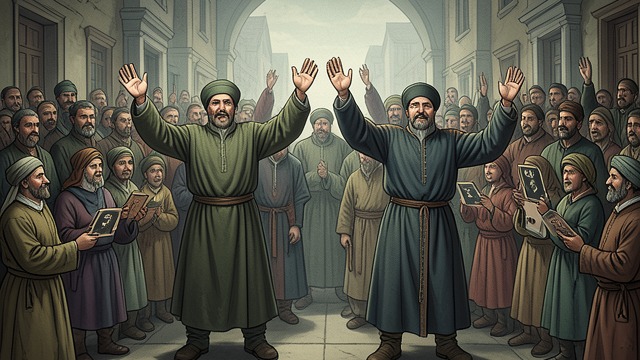
Young activists hope that Catholic and Protestant workers can challenge discrimination together. Their approach rejects the idea that inherited religious identity must determine political allegiance.
An American model
The marchers draw inspiration from the civil-rights movement in the United States. Their songs and banners present public, peaceful protest as a route to structural change.
Marchers Meet Unionists
The Route Becomes Contested
Counter-protest gathers
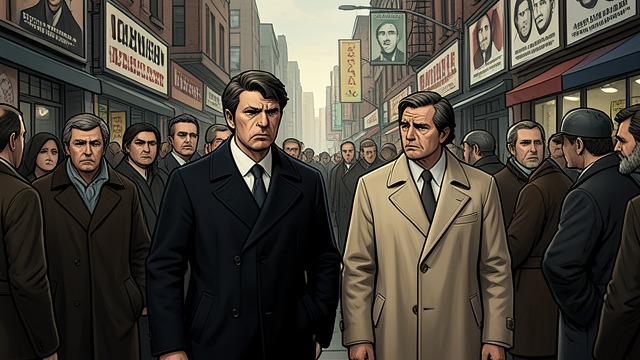
Ronald Bunting and loyalist supporters harass the marchers as they travel toward Derry. The confrontation reflects Protestant fears about political power and national identity.
A family divided
Ronnie Bunting marches with the protesters despite his father’s opposition. Their public disagreement shows that inherited allegiance can be challenged within families.
An Ambush at the Bridge
Nonviolence Under Attack
Coordinated violence
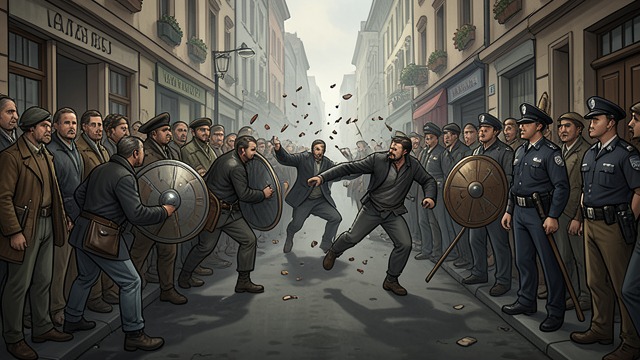
At Burntollet Bridge, attackers throw rocks, bottles, and blows at marchers trapped on a narrow road. The assault is not a spontaneous debate but an organized test of power.
The police question
Many officers fail to intervene, and some attackers are associated with the police auxiliary. The scene undermines the claim that the state is a neutral protector.
Dolours Sees the Limits

A Personal Turning Point
A face remembered
Dolours locks eyes with an attacker whose hatred she cannot understand. She carries the encounter with her long after the march.
Changed convictions
When Chrissie Price asks why her daughters did not fight back, the question exposes the gap between peaceful ideals and their violent environment. Dolours later sees armed action as a return to her family’s cause.
A Civil-Rights Legacy

Protest and Its Afterlife
Memory reshapes the movement
The march remains both a civil-rights protest and a prelude to armed conflict. Participants disagree about the extent to which republican organization was present and protective.
A broken possibility
The vision of cross-community solidarity does not disappear, but the violence makes it harder to sustain. The march illustrates how peaceful demands can be recast by opponents as a threat.
1968–January 1969
January 1969
January 1969
After January 1969
Later reflections
